

How Can Visually Impaired People Benefit from Prismatic Lenses?
Vision impairment occurs when an eye condition affects one or more visual functions, often causing a partial or complete reduction in visual perception. This can involve decreased visual acuity, loss of visual field, or both, conditions commonly associated with the term low vision. As life expectancy increases, the number of visually impaired people is also expected to grow, since many diseases responsible for vision loss are age-related.
Among the most frequent causes of visual impairment are uncorrected refractive errors, cataracts, age-related macular degeneration (AMD), diabetic retinopathy and glaucoma. Some of these diseases can permanently damage portions of the retina, creating an area of compromised vision known as a scotoma. While glaucoma often causes progressive peripheral vision loss, AMD can affect the central visual field and therefore the macula and fovea, areas responsible for maximum visual acuity.
When an absolute central scotoma affects both eyes, the visual system may select another retinal area to perform central vision tasks. This point is known as the Preferred Retinal Locus (PRL). Once the patient learns to fixate objects using this retinal area, the mechanism is referred to as eccentric fixation.
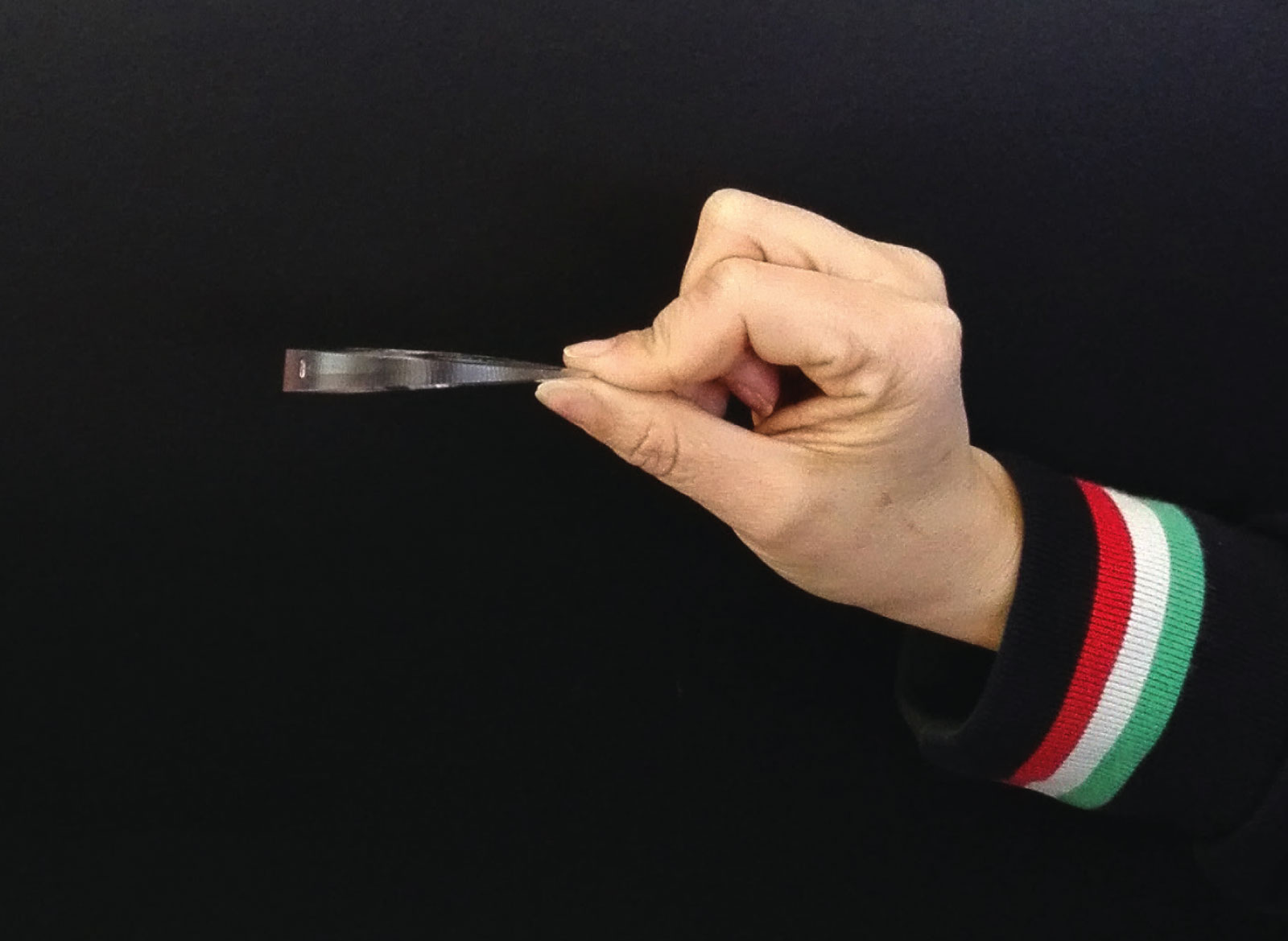
Although eccentric fixation can improve residual visual acuity, maintaining the necessary eye deviation may become uncomfortable and tiring. This is where prismatic lenses can play an important role. The prism can realign the PRL with the observed object, compensating for the ocular deviation and allowing the eye to return toward its primary gaze position.
These devices are commonly known as Eccentric Viewing Spectacles (EVS). Studies cited in the article report improvements in object-search time, visual acuity compared with compromised central vision, and quality-of-life questionnaire scores. EVS generally use yoked prisms, with equal power, axis and direction in both eyes to preserve binocular cooperation as much as possible. Typical values are 4, 6 or 8 prism dioptres, although higher powers may be required in advanced cases.
An important evolution comes from freeform optical surface technology. Traditional prismatic lenses could be excessively thick and heavy, reducing comfort and encouraging patients to stop using them. Modern multi-aspherical automatic lenticularization algorithms developed by ProCrea Tech can significantly reduce lens thickness and weight. Newer eccentric fixation lenses can also provide real image magnification of up to 7%, offering an additional improvement in visual acuity.
The combination of prismatic correction, eccentric fixation and freeform lens design therefore represents a technological approach aimed not only at improving residual visual function, but also at increasing comfort, aesthetics and the psychological-social quality of life of people with low vision.
Download MAFO 01-24

Lascia un commento